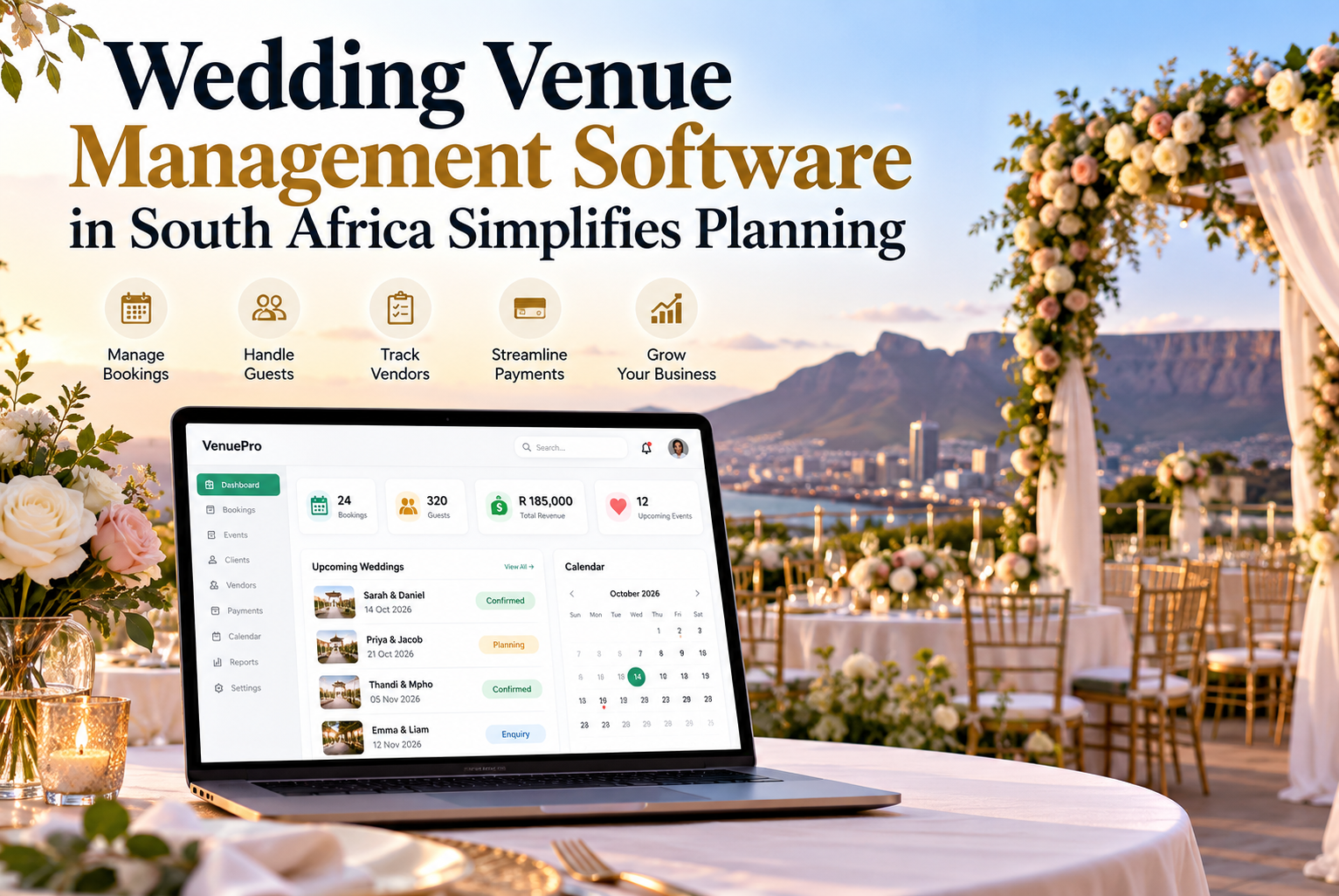
If you run a wedding venue in Stellenbosch, a conference center in Sand ton, or a boutique hotel on the Garden Route, you already know how a busy week goes. Inquiries land in your inbox, on WhatsApp and through your website form. Someone asks for a quote while someone else needs a deposit chased. A table plan changes for the third time, and you’re not sure whether the Saturday slot is still free. That is the gap a venue CRM in South Africa is meant to close.
Most venues start out managing this with spreadsheets, shared calendars and a long email trail. It works until it doesn’t. A double booking, a missed follow-up or a lost proposal costs real money, and it costs you the trust of a client who was about to say yes.
What is a venue CRM?
A standard CRM (customer relationship management system) tracks contacts and sales conversations. A venue CRM does the same, but it’s built around how venues actually work. It doesn’t only know who your client is. It knows which dates are held, which rooms are allocated, which proposal went out, what has been paid and what the client has chosen for the menu.
In plain terms, it connects your sales process to your event operations. The person who takes the enquiry, the person who plans the day and the person who sends the invoice all work from the same live information.
Why generic CRMs fall short for venues
Many South African venues try a general-purpose CRM first, and it’s an understandable choice. But a generic tool usually doesn’t understand:
- Availability. A venue sells time and space, not products. You need a diary that shows holds, confirmed bookings and room allocations at a glance.
- Proposals and contracts. Venues send quotes with packages, add-nos and terms. Clients expect to review and sign them online.
- Event detail. Guest numbers, dietary requirements, seating, schedules and supplier notes all matter once the booking is confirmed.
- Deposits and staged payments. Event payments follow a schedule, and tracking them by hand is a quick way to lose cash flow visibility.
If you end up bolting these on with workarounds, you haven’t saved time. You’ve just moved the admin somewhere else.
What a venue CRM planner should do
When people search for a venue CRM planner in South Africa, they usually want two things in one system: the relationship side (inquiries, follow-ups, proposals) and the planning side (diary, tables, schedules, payments). Here is what to look for.
1. A central event diary. You should see what’s happening daily, weekly or monthly without opening three different files. Availability, room allocations and event schedules belong in one place.
2. Fast, professional proposals and online contracts. The faster a polished proposal reaches a prospect, the better your chance of winning the booking. Online signing removes the printing, scanning and waiting.
3. Online payments. Taking deposits and final payments directly from invoices saves your team hours and makes life easier for clients.
4. A customer portal. Giving clients a place to see their documents, seating plans and event details cuts down the back-and-forth emails.
5. A table planner. For weddings and gala dinners especially, drag-and-drop table plans that clients can fill with guest names, menu choices and dietary needs take a huge load off your coordinator.
6. Online bookings. Letting people enquirer and book through your website means you capture leads even when the office is closed.
7. Integration. Your CRM should connect with your finance and payment tools so nobody is typing the same information twice.
Meet Event Cloud Solutions
This is exactly the kind of platform Event Cloud Solutions offers to hotels, conference centers, wedding venues and event spaces in South Africa. Powered by Events500, it’s a cloud-based system that brings inquiries, proposals, event planning, payments, reporting and customer communication into one place.
Here’s how it maps to the day-to-day work of a venue team:
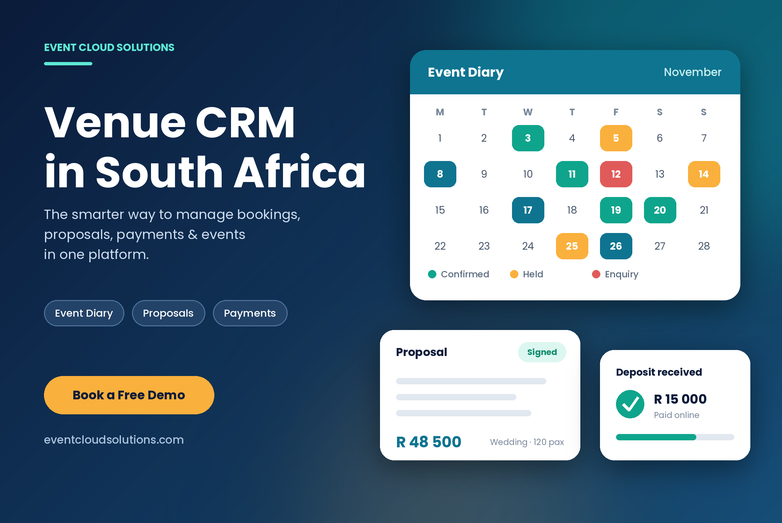
- Event Diary. See bookings, availability and room allocations across any day, week or month.
- Proposals and contracts. Send customization online proposals and let clients sign contracts digitally.
- Online payments. Collect deposits and payments straight from invoices using a payment provider you choose.
- Table planner. Build drag-and-drop table plans that customers can populate themselves.
- Customer portal. Give clients direct access to their documents, seating plans and files.
- Dashboard and reports. Use more than 15 out-of-the-box analytics and 40+ reports to understand your performance.
- Online bookings. Take bookings around the clock through your website.
- Integration. Connect with finance systems, payment gateways and other venue tools such as Stripe, World pay and Xledger.
Another thing worth mentioning: Event Cloud Solutions advertises transparent pricing with no hidden costs, and offers dedicated support from a team that understands venue operations. For a business where every rand counts, that kind of predictability matters.
Who benefits most?
A venue CRM isn’t only for big operations. It tends to make the biggest difference for:
- Wedding venues juggling long planning cycles, many guest details and multiple payments.
- Conference and event centers managing several rooms and back-to-back bookings.
- Hotels with a busy events and banqueting side that needs to stay organised alongside rooms.
- Growing venues that have outgrown spreadsheets and want to scale without hiring more admin staff.
How to choose the right venue CRM
Before you commit to any system, ask a few honest questions:
- Can it show me my availability clearly, in one place?
- Can my clients view, sign and pay online?
- Will it work with the finance tools I already use?
- Is the pricing clear, with no surprises?
- Will I get real support when something goes wrong on a Saturday afternoon?
- Can I try it before I decide?
That last one is important. Seeing the software in action tells you more than any feature list. Event Cloud Solutions offers interactive demos of its diary, proposals, table planner, customer portal and more, so you can explore how it works before speaking to anyone.
Final thoughts
A venue CRM isn’t about adding more technology to your business. It’s about taking away the friction: the missed emails, the double entries, the late-night spreadsheet checks. When inquiries, planning and payments sit in one system, your team spends less time on admin and more time creating events people remember.
If you’re ready to see what that could look like for your venue, book a demo with Event Cloud Solutions or get in touch on +27 83 448 2323 or info@eventcloudsolutions.com.